
Teledyne Analytical Instruments
O2 Analysers
Teledyne supplies a range of O2 analysers.
Depending on your needs, we can build the analysers into industrial cabinets and mount them with gas filters, gas cooler, humidity monitor, condensate pump and sample pump, in order that the analysers measure on dry and particle-free sample gas.
The system can be delivered for zone 1 and zone 2 areas.

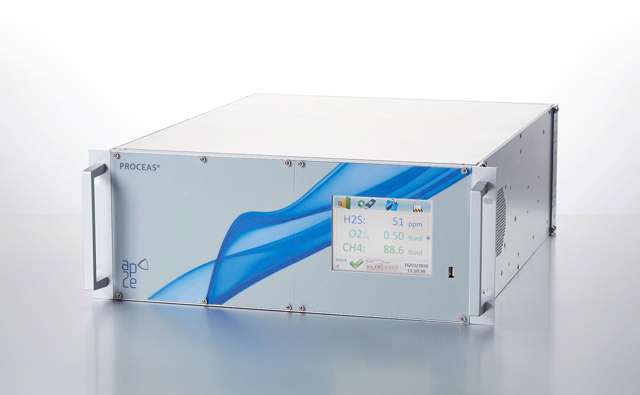
ProCeas® Product Highlights
The ProCeas® platform can be configured for different industrial and environmental needs:
- ProCeas® GENERAL Analyzer – multi-component analysis (CH₄, CO, CO₂, O₂, NH₃, H₂O, HF, HCl, NOx and more) in one analyzer.
- Application-specific variants – trace gas detectors for H₂S, NH₃, NOx, H₂O, H₂ and many other compounds.
- Pre-calibrated systems packaged in rugged 19″ rack or ATEX-compliant enclosures for hazardous zones.
Whether you’re monitoring process control, ensuring safety or checking gas purity, ProCeas® offers unmatched flexibility and performance.
Sensor Technology
High-accuracy CO₂ measurement is achieved with NDIR (Non-Dispersive Infrared) sensing — a proven technology for stable, long-term performance with low drift. The CO₂ Panel reads air samples via an integrated probe or remote sensor depending on installation configuration.
Key capabilities include:
- Rapid response to changing CO₂ levels
- Stable baseline with automatic self-calibration options
- Minimal maintenance and long sensor life
- Clear digital display with intuitive read-outs
CL11 CO₂ Transmitter Compatibility
The Rotronic CO₂ Panel pairs especially well with the CL11 CO₂ transmitter, a dedicated humidity-compensated CO₂ sensor optimized for environmental monitoring. The CL11 sensor provides:
- NDIR CO₂ detection with automatic humidity correction
- Ranges suitable for indoor air quality applications
- Compatibility with analog and digital (Modbus) outputs
Together, the CO₂ Panel and CL11 form a robust monitoring station for:
- Classroom and office air quality
- Conference and meeting spaces
- Production and processing environments
- Cleanrooms and controlled labs
Advantages That Matter to You
- Simultaneous multi-gas measurement: Up to dozens of species measured at once without cross-interference.
- Direct intensity measurement: Countless internal paths and laser feedback deliver high sensitivity and resolution.
- Robust operation: Designed for industrial conditions, including options for ATEX/Hazardous Zone installations.
- Ease of integration: Standard digital (Ethernet, RS-485, Modbus) and analog outputs for control systems.
- Minimal maintenance: Low-pressure design reduces fouling and the need for filters.
Why It Matters
With increasingly stringent environmental regulations and tighter process specifications globally, you need analytical tools that give accurate, rapid feedback on gas composition without unnecessary complexity — and without frequent recalibration or high consumable costs. AP2E’s ProCeas® analyzers deliver just that: precision you can rely on, wherever you need it.
CO₂ Principles
Carbon dioxide (CO₂) is a colorless and odorless gas that naturally occurs in the Earth’s atmosphere — but in high concentrations, it can be hazardous. The natural concentration of CO₂ outdoors is about 0.04 % (400 ppm). When humans and animals exhale this gas, it mixes rapidly with the surrounding air — even in well-ventilated rooms.
A high concentration of CO₂ becomes noticeable when people start to feel tired, drowsy, or lose concentration. This effect develops faster in smaller rooms with many people present, such as conference rooms or classrooms.
To take appropriate countermeasures — such as adding fresh air — it is important that modern climate control systems measure not only humidity and temperature, but also CO₂ concentration. The CO₂ level is widely recognized as a key indicator of indoor air quality.
These products are used within these applications

Air Monitoring
Efficient Air Monitoring Solutions for Healthier Environments. In today’s world, maintaining clean and healthy air is essential for both indoor and outdoor environments.