Knick
Process Sensors for Liquid Analysis – Reliable Measurement Under Real Process Conditions
Get Stable Measurement Data – Even in Challenging Environments
In many processes, the difficulty is not measuring a parameter – it is maintaining a stable and reliable measurement over time.
Sensors are often exposed to:
- Fouling and coating
- Chemical exposure
- Temperature and pressure variations
This affects accuracy, increases drift, and leads to more frequent maintenance.
Choosing the right sensor technology is essential to ensure that your measurement data remains reliable in daily operation.

Designed for Continuous Measurement in Industrial Processes
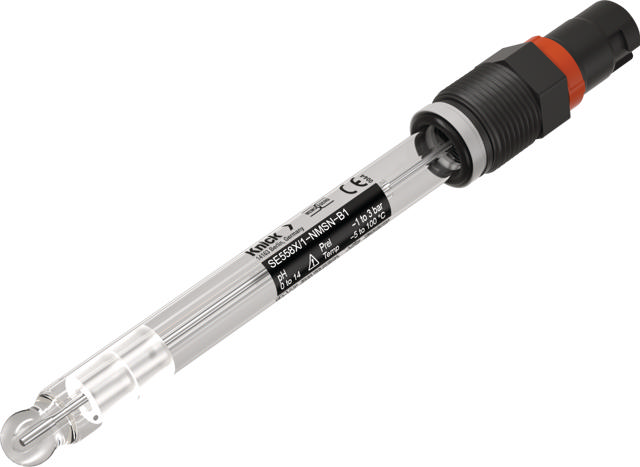
Knick sensors are developed for continuous inline measurement of key liquid parameters, including:
- pH
- ORP (redox potential)
- Conductivity
- Dissolved oxygen
The sensors are designed to operate under real process conditions, where stability, durability, and compatibility with maintenance systems are critical.
They can be used as standalone measurement points or as part of a complete system with:
Sensor Technologies That Support Reliable Operation
Different applications require different sensor designs. The portfolio includes:
Digital Sensors with Memosens Technology
- Contactless signal transmission
- Resistant to moisture and interference
- Pre-calibrated sensors for quick replacement
Relevant when: You need stable signal quality and simplified maintenance
Sensors for Harsh and Contaminated Processes
- Designed for fouling and aggressive media
- Robust materials and reference systems
- Long-term stability under difficult conditions
Relevant when: Standard sensors fail due to coating or chemical exposure
Sensors for Hygienic and Regulated Applications
- Designed for CIP/SIP processes
- Hygienic process connections
- Suitable for food and pharmaceutical production
Relevant when: Cleanability, traceability, and compliance are required
Sensors for High-Accuracy Measurement
- High precision for critical control points
- Stable reference systems
- Suitable for demanding process control
Relevant when: Measurement accuracy directly affects product quality or compliance
Where Sensor Selection Impacts Your Process
You will typically need to carefully select sensor technology when:
- Measurement drift leads to unstable process control
- Sensors require frequent calibration or replacement
- Fouling or coating affects measurement reliability
- Cleaning procedures are difficult or inconsistent
Typical applications include:
- Chemical and petrochemical production
- Water and wastewater treatment
- Food and beverage processing
- Pharmaceutical manufacturing
What You Gain With the Right Sensor Setup
Choosing the right sensor – and combining it with the right installation and maintenance strategy – gives you:
- More stable and reliable measurement data
- Reduced need for manual calibration and cleaning
- Longer sensor lifetime
- Better process control and documentation
- Lower total cost of ownership
Part of a Complete Measurement Solution
Sensors are only one part of a reliable measurement point.
For optimal performance, they are typically combined with:
- SensoGate retractable fittings – for safe and efficient maintenance
- Ceramat systems – for automated cleaning and calibration
- Transmitters and analyzers – for signal processing and control integration
This ensures that your measurement system is designed not just for accuracy – but for long-term stability.
These products are used within these applications

Wastewater
Optimize treatment processes and environmental compliance with dependable gas and emission monitoring.

Pharmaceuticals
Reliable monitoring solutions for life science environments – including purified water analysis, gas monitoring and medical gas verification.

Petrochemical
Monitor complex gas streams with precision to safeguard processes, personnel, and production quality.

Industrial Gases
Ensure gas purity, safety, and process control with reliable industrial gas analysis solutions from Norsk Analyse.

Food and Beverages
Ensure stable production and consistent product quality with reliable monitoring solutions for food and beverage processes.