
Rotronic
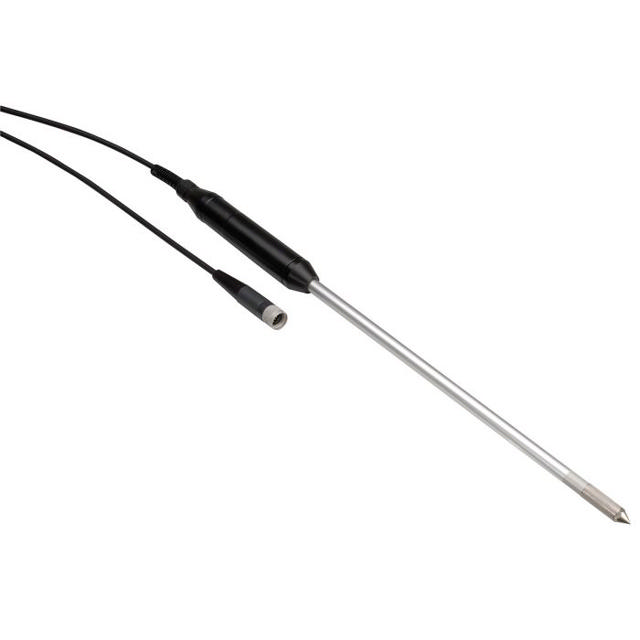
HC2-HP28 – Insertion Probe for Water Activity and Humidity Measurement
When samples are difficult to handle, large, or sensitive to disturbance, traditional water activity measurement in chambers is not always practical.
The Rotronic HC2-HP28 insertion probe allows you to measure water activity, humidity, and temperature directly in the material – giving you insight without altering the sample.
Want to know more about our solutions from Rotronic?
Measure Directly in the Product
Instead of placing a sample in a chamber, the HC2-HP28 is inserted directly into the material.
This makes it possible to measure:
- Bulk materials
- Stored products
- Materials in process or production
In practice, this reduces handling and ensures that the measurement reflects real conditions.
Based on Proven HygroClip Technology
The HC2-HP28 is built on Rotronic’s HygroClip2 platform with AirChip technology, ensuring:
- High measurement accuracy
- Stable and repeatable results
- Digital signal processing in the probe
The probe measures relative humidity and temperature, which can be used to determine water activity directly in the material.
Designed for Challenging Measurement Conditions
Insertion measurements often involve demanding environments.
The HC2-HP28 is designed to handle this:
- Robust probe design for industrial and field use
- Suitable for materials with varying structure and density
- Reliable performance in non-uniform samples
Flexible Integration Across Systems
Like other HygroClip probes, the HC2-HP28 can be used with:
- Handheld instruments (HygroPalm)
- Transmitters (HygroFlex series)
- Laboratory systems (HygroLab)
This allows you to use the same probe across different measurement setups.
Applications
- Food and agricultural products – grains, powders, storage conditions
- Building materials – concrete, wood, insulation
- Biomass and energy – moisture behavior in bulk materials
- Industrial processes – in-situ measurement without sampling
What This Means for Your Work
With the HC2-HP28, you get:
- Measurement directly in the material
- Reduced need for sampling and preparation
- More representative results
- Greater flexibility in how and where you measure
These products are used within these applications

Research & Lab
Ensure reliable, reproducible, and compliant laboratory measurements with integrated solutions for sampling, analysis, and continuous monitoring.

Pharmaceuticals
Reliable monitoring solutions for life science environments – including purified water analysis, gas monitoring and medical gas verification.

Food and Beverages
Ensure stable production and consistent product quality with reliable monitoring solutions for food and beverage processes.

Biogas
Handle fluctuating gas compositions and strict quality requirements with reliable biogas analysis systems.